Ecological Restoration Certificate
Online & In-Person
January 2027
Launched in 2024, the Ecological Restoration Certificate explores non-chemical strategies for caring for the land. Led by Waxwing EcoWorks and hosted by the Horn Farm Center, this program is designed for active and aspiring professionals, conservation volunteers, landowners, and environmental advocates alike. Join one of two tracks–a fully virtual course, or a hybrid intensive with hands-on learning at the Horn Farm.
Learn how to partner with nature
And assist in recovering degraded ecosystems to create healthy, resilient habitat for wildlife and people.

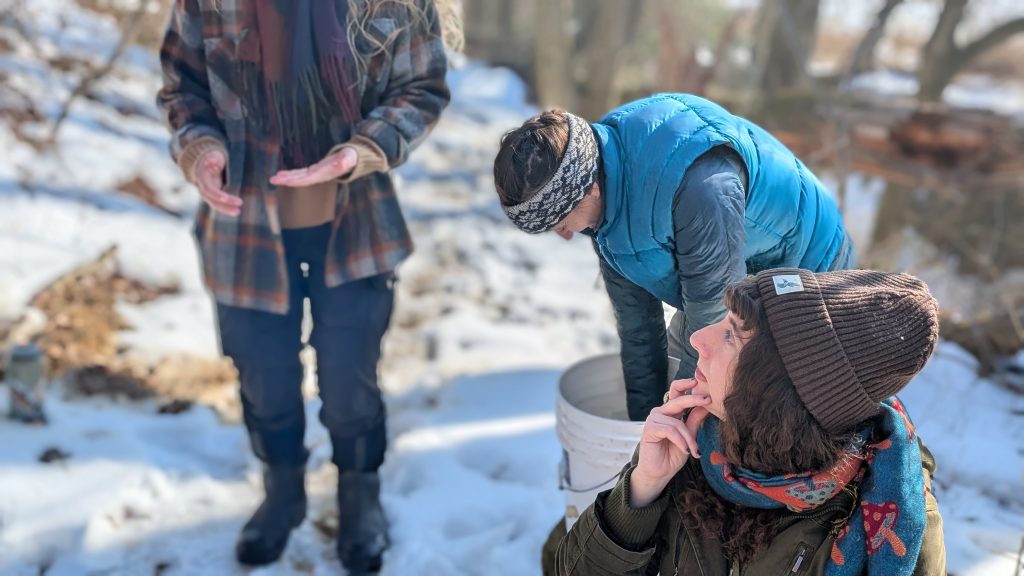
This workshop helps you cultivate a toolbox and and ethic for compassionate stewardship of your local ecosystem. You’ll explore regenerative skills for ecological healing, focusing specifically on restoration practices that prioritize human power instead of chemical intervention.
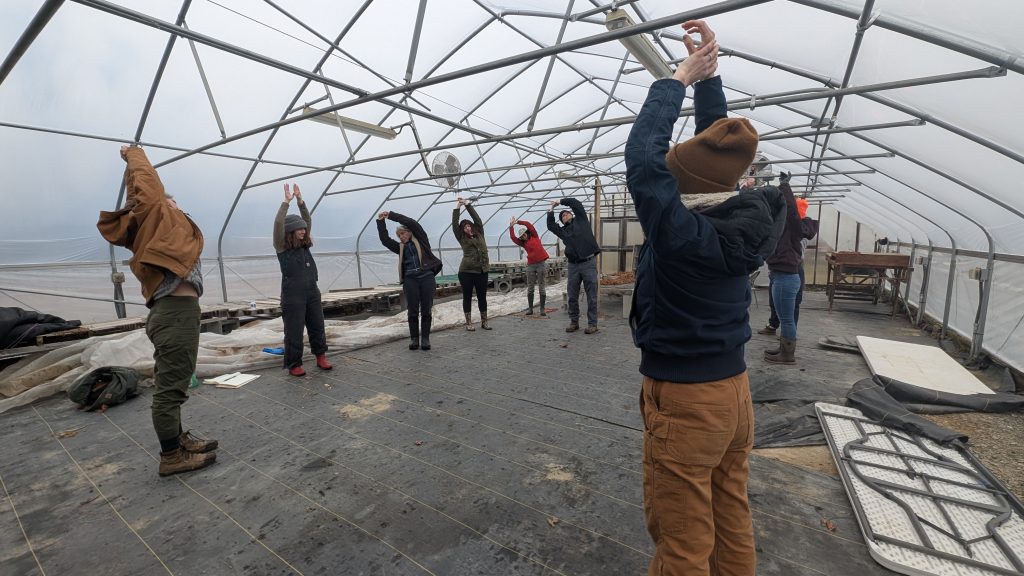
Whether you’re an experienced conservationist, a budding professional, or simply passionate about environmental restoration, you’ll gain new perspectives and skills that are increasingly crucial in today’s world. Non-chemical restoration is powerfully versatile; you can adapt what you learn to residential land management, a landscaping business, larger-scale conservation, regenerative farming, and more. To help build a resilient practice, you’ll also participate in mindful movement and writing exercises that underline your role as a member of the ecosystem.


Choose Your Learning Path
Note: Both tracks are taught from a synergy of core ecological sciences, traditional ecological knowledge (TEK), and emergent practices. Participants will be invited to engage in mindful movement (Qigong), contemplative written reflections, and small group discussions. This is an accelerated course that surfaces core concepts and practices for ecological practitioners and serious stewards.

Virtual Track
January 14, 21, 28 | 10.5 hours
Three online, synchronous sessions covering key technical information for non-toxic restoration.
This track is designed for the out-of-town, curious ecological restoration practitioner or DIYer. We have created this online learning option for those seeking the exposure to this practice, but who may be unable to make the trip to our learning grounds.
Thursday, January 14 | 5 – 8:30PM EST
- Comparing Active and Passive Restoration
- Conducting a Site Analysis (site history, ecological memory/health, elemental forces, succession, etc.)
- Referencing landscapes to inform and provide insight for restoration
- Reviewing Worldwide Ecological Restoration Standards (ecological and social)
Thursday, January 21 | 5 – 8:30PM EST
- Building a language and literacy around non-toxic ecological restoration to advocate for these practices with diverse audiences.
- Assessing Harms of Pesticide Use
- Controlling dispersive introduced species via non-toxic methods (e.g., mechanical, plant allies, etc.).
Thursday, January 28 | 5 – 8:30PM EST
- Navigating Plant Sourcing of Local Ecotypes
- Designing native plant communities and seed mixes for ecological restoration.
- Phasing restoration activities based on seasonality

Hybrid Certification Track
Virtual Sessions + January 30 | 18.5 hours
This track is designed for ecological restoration practitioners or DIYers who are seeking a comprehensive learning experience with hands-on reinforcement. We encourage students who live locally or regionally to choose this track.
After completing all of the sessions in the Virtual Track, students will apply what they learn while covering additional topics on the Horn Farm’s learning grounds.
In order to receive a certification, students will also be required to submit two assignments before the course concludes. These homework assignments will extend the classroom experience to a restoration site of your choosing.
Saturday, January 30 | 9AM – 5PM
+ All sessions of the Virtual Track
- Practicing Land Acknowledgement and Allyship
- Observing and identifying plant communities, local ecotypes, and microclimates
- Practicing Site Analysis
- Practicing with Tools for Efficient Ecological Restoration
- Practicing Non-Chemical Introduced Species Removal
- Practicing Installing and Restoring Native Plant Communities
- Creating and Sowing a Restoration Seed Mix
- Reducing Risk of Injury with Mindful Movement
*Winter weather may the alter in-person date. The snow date for this session is Saturday, February 6th.
On either path you choose, you’ll build a language and sensibility for ecological restoration that does not rely on toxic intervention, helping you become a better advocate for these practices in your community.

What You Will Learn
When learning ways to tend and restore local ecosystems, there is no substitute for in-person experience. Both tracks aspire to cover all of the topics below, but our Hybrid Certification Track offers the optimal learning environment.
Assessing Site Conditions
- Evaluating site history and ecological memory/health.
- Observing microclimates, ecosystems, elemental forces, and soil succession.
- Perceiving site use and interactions of humans and wildlife
Learning From Nature
- Observing and identifying plant communities, local ecotypes, and microclimates.
- Referencing landscapes to inform and provide insight for restoration.
- Combining indigenous and modern knowledge bases for restoration approaches (e.g. Traditional Ecological Knowledge (TEK), Science, and Emergent Practices).
Planning for Restoration Projects
- Designing native plant communities and seed mixes for ecological restoration.
- Optimizing ecological services, biodiversity, and regenerative food production for humans and wildlife.
- Phasing restoration activities based on seasonal patterns.
Implementing Restoration Projects
- Controlling dispersive introduced species via non-toxic methods
- Navigating plant sourcing, propagation, and local plant genetics (ecotypes).
- Installing and restoring native plant communities.
Building A Sustainable Practice
- Reducing the risk of injuries and burnout with mindful movement.
- Cultivating emotional resilience in the face of social challenges and ecological grief.
- Building a language and literacy around non-toxic ecological restoration to advocate for these practices with diverse audiences.
- Developing a community of like-minded individuals pursuing ecological restoration in non-toxic ways.

Why Join?
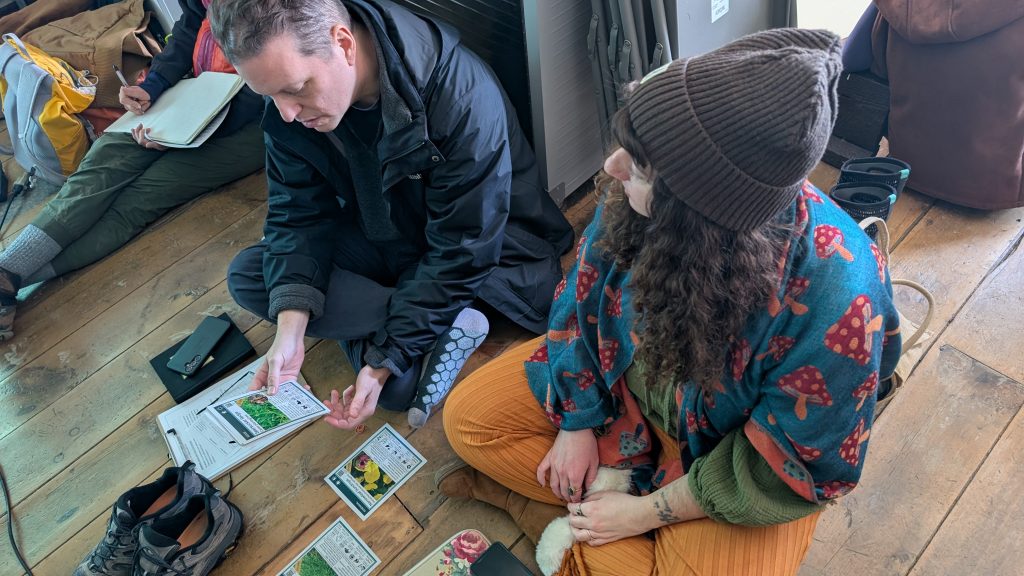
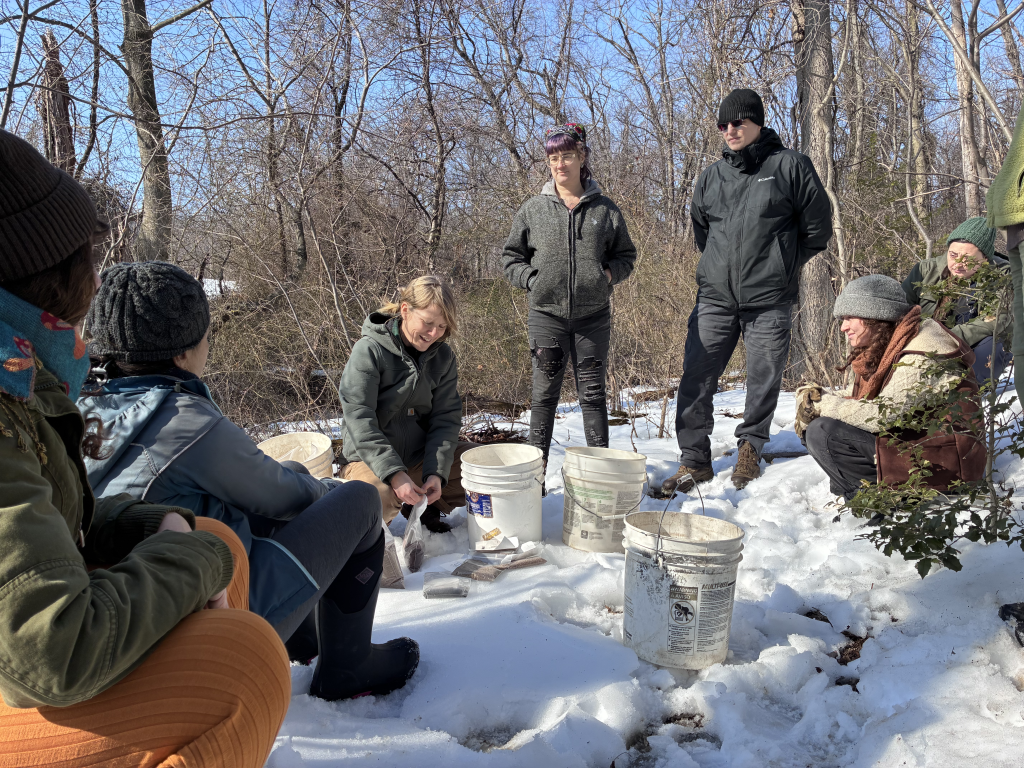
The skills and perspectives explored in this program are useful across the spectrum of ecological restoration work–from professional development to personal enrichment. Our sessions together unite hard skills–environmental literacy, resource awareness, and ground experience–with place-based learning to deepen your sense of empathy and connection with the land. If you identify with one or more of the attributes below, you’ll find heightened benefit in joining this program:
- You are a practicing or budding professional in the fields of ecological restoration, conservation, landscaping, and environmental education / advocacy.
- You are a volunteer land steward and/or educator with a conservancy, environmental nonprofit, or community program like the Master Watershed Stewards.
- You are a landowner with access to degraded woodland and meadow habitats that can serve as refuges for biodiversity.
- You’re an environmental advocate looking to connect with peers and co-conspirators who share your passion for defending and supporting nature.
Anyone seeking an alternative to conventional, chemically-driven approaches to ecological restoration will also find this program uniquely empowering. Together, we’re developing a community of like-minded land stewards pursuing restoration in non-toxic ways.

Payment & Other Details
Program Costs
Virtual Track: $270 / person
Hybrid Certification Track: $495 / person
Payment Options
When registering, you can pay in full or submit a deposit of $75 to enroll in a payment plan.
Depending on your track and the timing of your enrollment, payment plans can consist of two to three installments. Customized payment plans may be offered if requested.
For students following a payment plan, all installments must be submitted by Thursday, January 14th at noon.
At this time, we cannot offer scholarships to offset program costs. We will update this information if financial support becomes available.
Program Schedules
Virtual Track
All sessions synchronous and online.
- Thursday, January 14 | 5-8:30pm EST
- Thursday, January 21 | 5-8:30pm EST
- Thursday, January 28 | 5-8:30pm EST
Hybrid Certification Track
- Thursday, January 14 | 5-8:30pm EST | online
- Thursday, January 21 | 5-8:30pm EST | online
- Thursday, January 28 | 5-8:30pm EST | online
- Saturday, January 30 | 9am-5pm | in-person
- Snow day: Saturday, February 6th
Registration Deadline
Registrations for the virtual and in-person course options CLOSE at the end of the day on Sunday, January 10th, 2027.
Certification Homework
Students will apply technical skills reviewed in this course on an individual on-site project in their ecological context, via two submitted assignments. Completion of homework is required in order to receive a certificate at the end of the program.
Standards and practices presented can be applied across a diversity of ecoregions, given the emphasis on worldwide ecological restoration principles and standards (ecological and social) presented in this course.
In-Person Logistics
Physical Activity: students should be comfortable standing for long periods, walking on steep grades (briefly), and performing manual labor such as removing plants and planting trees. Since students will work together, we can accommodate different mobility and exertion levels to some degree. You may bring a chair and observe the working portions if needed.
Outdoor Preparedness: January is the coldest month of the year in the Lower Susquehanna Riverlands. Barring inclement weather that renders driving or working conditions unsafe, we will plan to host our in-person sessions primarily outdoors. We’ll be in wild areas on the Horn Farm property, which require about 1/4 mile of walking on grass paths to access.
What to Bring: please pack in the following for in-person sessions.
- Warm clothes, sturdy boots, and gloves for working outside in winter weather. You are welcome to bring an extra change of clothes. Expect to do a fair amount of walking on potentially muddy or uneven ground.
- A journal/notebook and writing utensil.
- A reusable water bottle (refills available on site).
- A packed lunch (fridge space available but not guaranteed)
- Backpack snacks as preferred.
- A backjack, sitting pillow, or folding chair if you’d like to sit off the ground.
Punctuality: Plan to arrive ~10 minutes early to each session so the group can get started on time. In-person students will assemble at the Horn Farm’s farmhouse before the class begins.
Before registering, please make sure to review the Horn Farm Center’s Cancellation and Refund Policy.
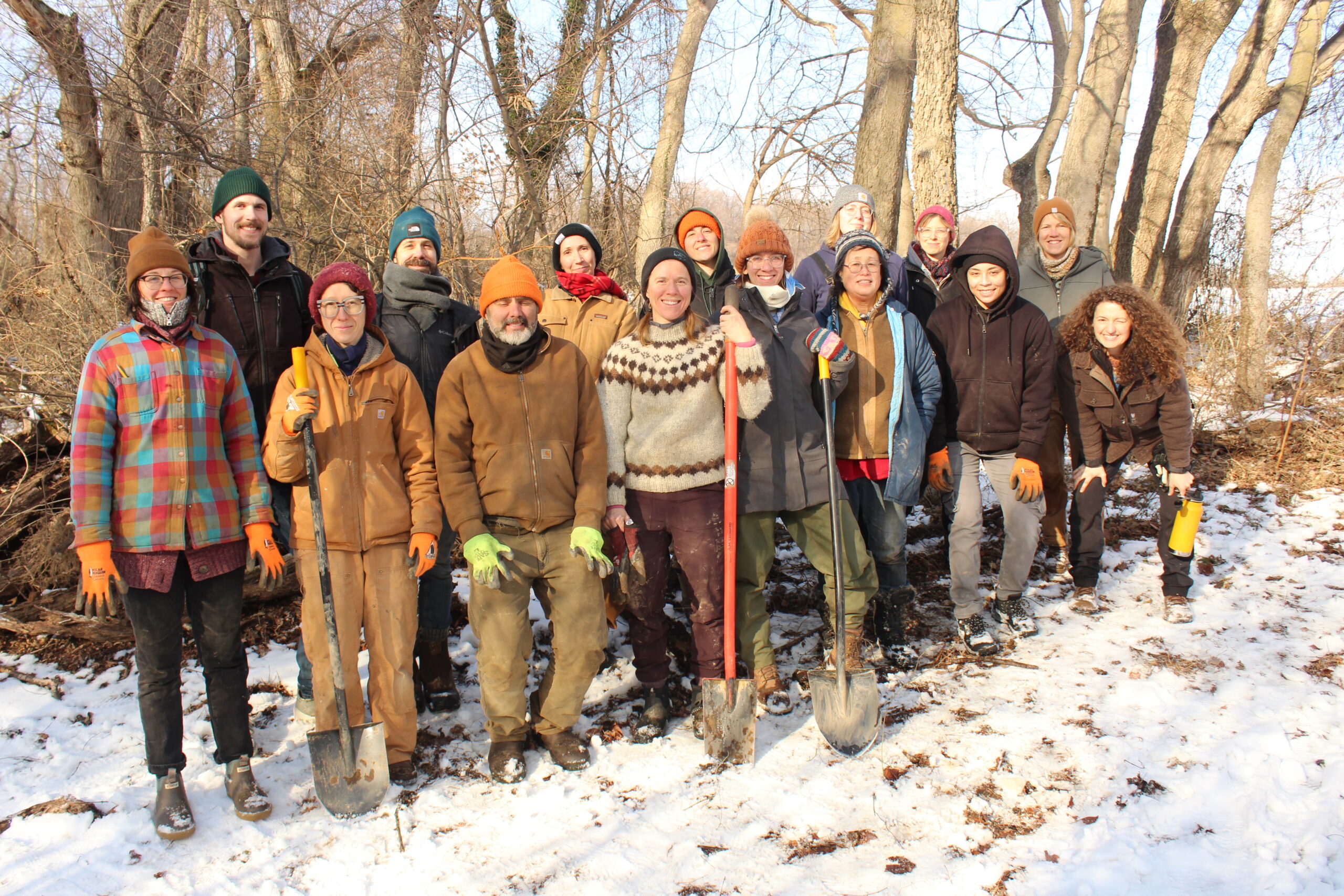
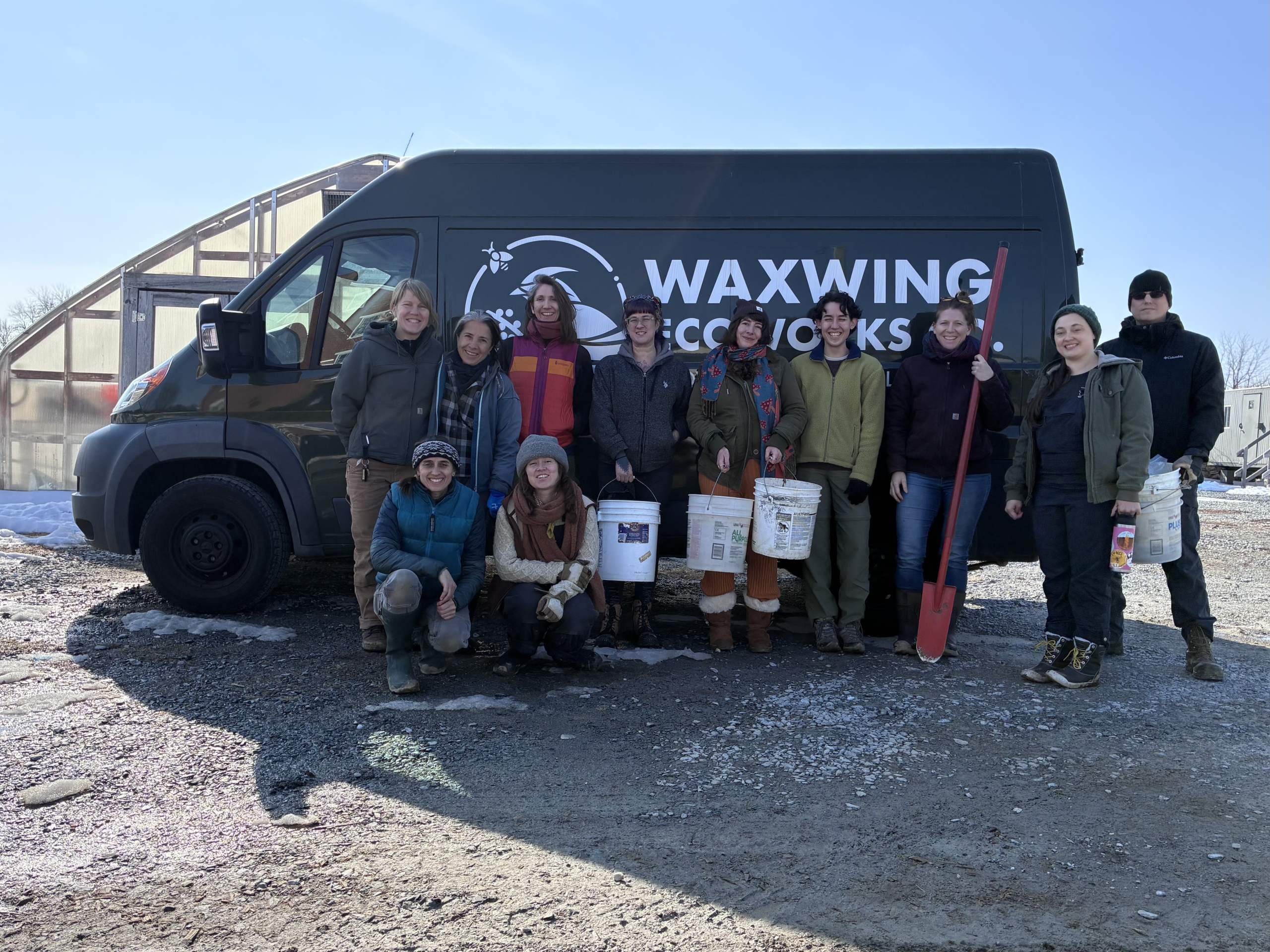
About the Instructor

Elyse Jurgen
M.Ed, CBLP, CERP
Elyse Jurgen, M.Ed, CBLP, CERP, owner of Waxwing EcoWorks Co., is a community collaborator inspired by rebuilding ecological literacy and biodiversity with her team of ecological practitioners. Ample hikes and plant community observations in nature spark her imagination, bringing a rare blend of art and science into her practice. Her work deepens your connection to place, and empowers you to take meaningful action to maximize your land’s potential to support wildlife and enhance human well-being.
Elyse leads three adult certification programs- the Ecological Restoration Certificate and Ecological Gardener Training Program with the Horn Farm Center and Habitat Advocates with the Lancaster Conservancy, and also coordinates Lancaster Schoolyard Habitat to engage urban youth in building biodiversity in schoolyards. She also facilitates conservation landscaping training to guide existing landscaping crews to embrace more resilient practices.
She is certified as an Ecological Restoration Practitioner (CERP), Chesapeake Bay Landscape Professional (CBLP), Permaculture Designer, and earned an Ecological Gardening Certification from Mt. Cuba Center. She holds a Master’s Degree in Environmental Education, 7-12 Biology Teaching Certification, and also participated in Cornell University’s Civic Ecology program. As a certified Qigong teaching instructor, she bakes this practice into her trainings and everyday field work, as a means to tend to our best restoration tools- our human bodies!
